



Cataracts
What is a Cataract?
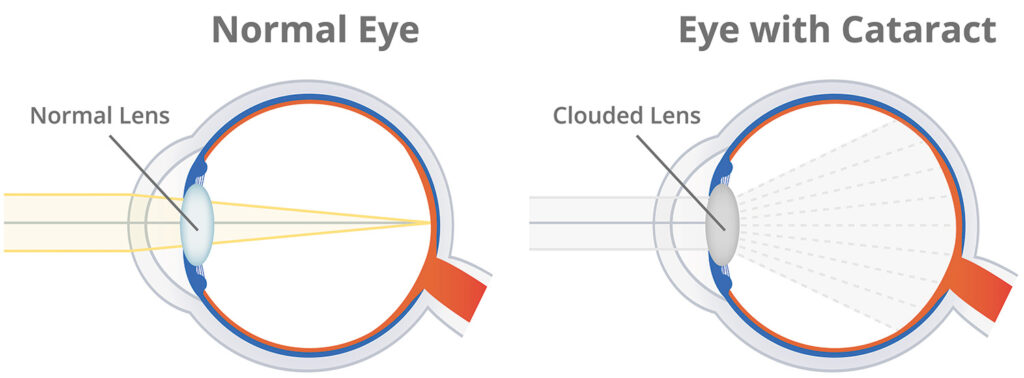
The natural lens is an integral part of your eye that is vital in maintaining clear vision. When rays of light enter the eye, the lens bends them into the retina, allowing you to see the world around you.
Cataracts occur when the lens of the eye becomes clouded. It is often a result of the natural aging process, as proteins on the lens slowly break down and form clumps, making it harder to see.
Many patients describe vision with cataracts as looking through a foggy car windshield. As the cataracts impair your vision, things look hazier and blurrier, and colors may appear duller.
What are the Symptoms of Cataracts?
As cataracts typically develop slowly over time, many patients may not notice any symptoms until later stages of development. For patients who do experience cataract symptoms, common signs of cataracts include:
- Blurry or cloudy vision
- Colors appear duller, faded, or yellowed
- Heightened sensitivity to light
- Double vision
- Halos, streaks, or glare around lights
- Poor night vision, especially when driving or reading
- Needing frequent prescription changes






If you are experiencing any of these symptoms, it could be a sign of cataracts or another eye condition. It is essential to attend regular eye exams with your eye doctor at Nova Eye Experts so they can check for signs of cataracts or other eye conditions and recommend treatment options to improve your vision and eye health.
How are Cataracts Diagnosed?
If you think you may have cataracts or your eye doctor notices signs of cataracts during your routine eye exam, they will likely recommend a cataract evaluation. They will ask you questions about your symptoms, including how they may be impacting your day-to-day activities, as well as your medical history.
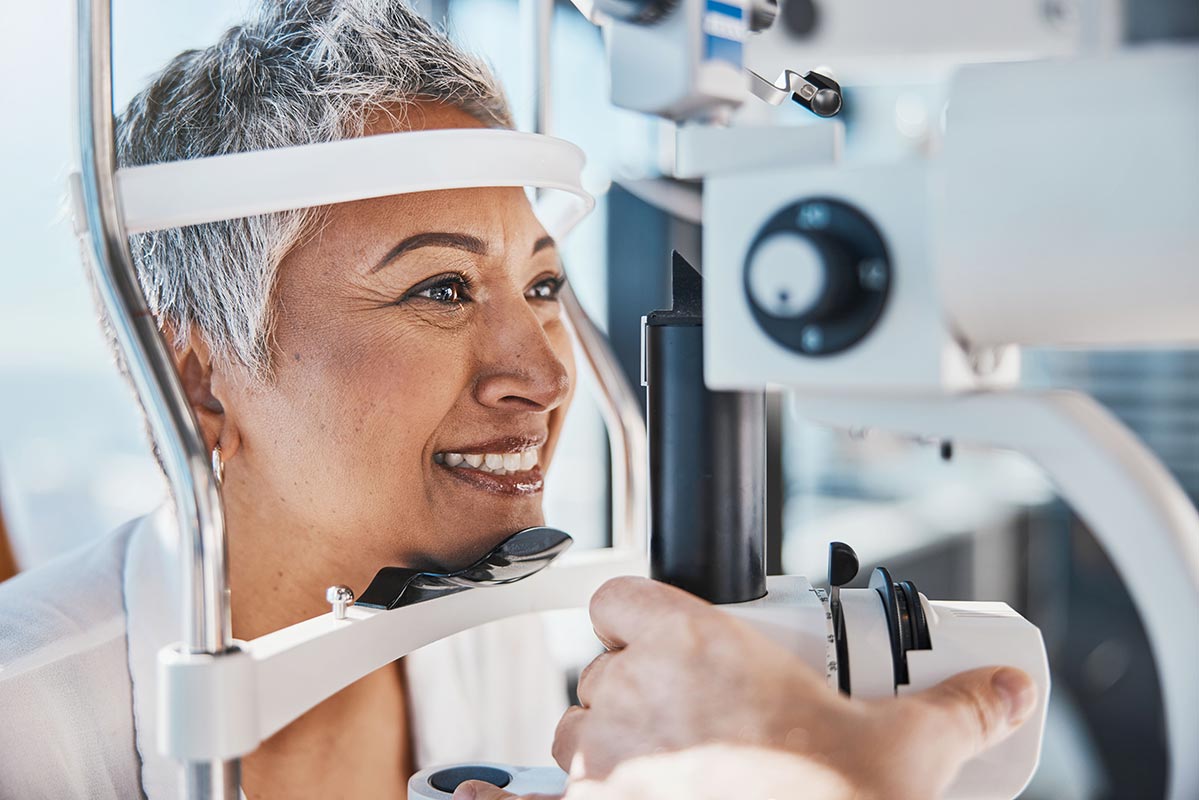
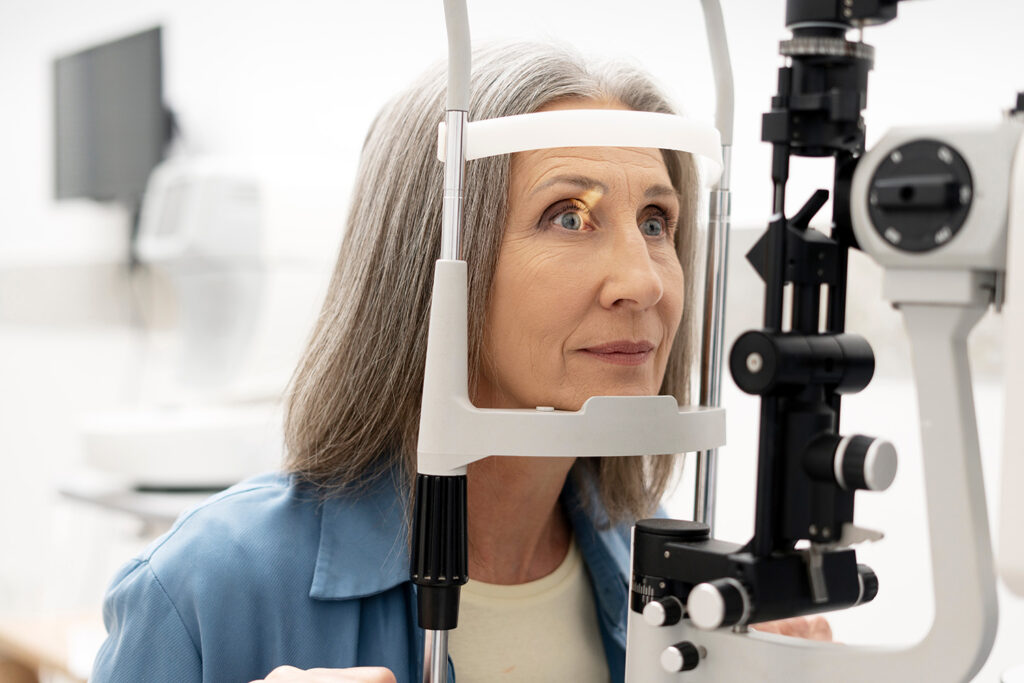
Diagnostic tests to check for cataracts may include a slit-lamp exam, a retinal exam, or a visual acuity test. During a slit-lamp exam, your eye doctor will dilate your pupil and use a slit-lamp microscope to inspect your lens, cornea, and iris for signs of cataracts or other eye conditions.
They may also perform a retinal exam with the slit-lamp microscope to examine the retina and optic nerve for signs of cataracts or glaucoma. The visual acuity test can be used to assess visual clarity.
You will read letters off an eye chart, testing both eyes to measure how clear you can see. Your eye doctor may compare the results of your visual acuity test to previous ones you’ve taken to determine how much your vision is changing.
Who is at Risk of Developing Cataracts?
The most significant risk factor for developing cataracts is age, as they are a natural result of aging. However, other risk factors could lead to developing cataracts faster or at a younger age.
Common risk factors for cataracts include:
- Having diabetes
- Smoking
- Having a family history of cataracts
- Having eye conditions like glaucoma, retinitis pigmentosa, or uveitis
- Having a history of eye injuries or procedures
- Having had radiation treatments on the upper body
- The use of corticosteroids
- Having excess sun exposure
- Exposure to environmental factors like air pollution, pesticides, or industrial chemicals

Although uncommon, some people are born with cataracts, a condition called congenital cataracts. If you develop cataracts due to aging, these risk factors can accelerate their development and increase the severity of their impact on your vision.
Reclaim Your Vision with Cataract Surgery
The only lasting treatment for cataracts is cataract surgery. This procedure involves removing the natural lens of the eye and replacing it with an artificial intraocular lens.
Do you want to learn more about restoring your eyesight with cataract surgery? Schedule your consultation at Nova Eye Experts in Manassas, Virginia, today!





