



Dry Eye Treatment

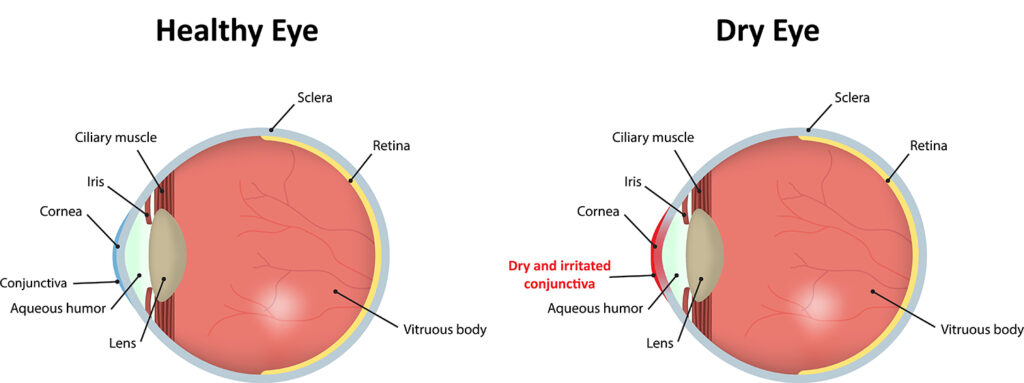
What Is Dry Eye?
Dry eye syndrome, which is also known as dry eye disease, occurs when your eyes don’t produce enough tears or when the tears you do produce aren’t of good quality. Your tears act as a protective coating that keeps your eyes comfortable and your vision clear.
When this system isn’t working properly, it can lead to discomfort and even vision problems. Your tear film is made up of three important layers:
- An oily layer that prevents tears from evaporating too quickly
- A watery layer that cleanses the eye and washes away particles
- A mucus layer that helps tears stick to the eye’s surface
When any of these layers aren’t functioning properly, it can cause the surface of the eyes to become dry and cause various bothersome symptoms.
Common Symptoms to Watch For
Dry eye can affect everyone differently, but here are the most common signs our patients report:
Physical Discomfort:
- A gritty or sandy feeling, like something is in your eye
- Burning or stinging sensations
- Eyes that feel tired or heavy
- Redness and irritation
Vision-Related Issues:
- Blurry vision that comes and goes
- Difficulty wearing contact lenses comfortably
- Problems with night vision or glare sensitivity
Surprising Symptoms:
- Watery eyes (your body’s attempt to compensate for dryness)
- Mucus discharge
- Light sensitivity
Many patients are surprised to learn that watery eyes can actually be a sign of dry eye. When your eyes are chronically dry, they may overcompensate by producing excess tears, but these “reflex tears” don’t have the right balance to properly lubricate your eyes.
What is Dry Eye Treatment at Nova Eye Experts?
If you’ve ever experienced that gritty, burning sensation in your eyes, or found yourself constantly reaching for eye drops, you might be dealing with dry eye syndrome. This is a very common condition, yet many don’t fully understand what’s happening or realize that effective treatments are available.
At Nova Eye Experts, our eye care professionals have the knowledge and expertise to help you find the relief you deserve.
What Causes Dry Eye?
Several factors can contribute to this condition, and often it’s a combination of multiple causes working together. As you get older, tear production naturally decreases, making it harder for your eyes to stay properly lubricated.
Women, in particular, are susceptible to dry eye, especially during menopause when hormonal changes can affect tear production.
Environmental factors play a major role as well. Air conditioning and heating systems, wind and dry climates, extended computer use with reduced blinking, and contact lens wear can all contribute to dry eye symptoms.
Certain health conditions, like diabetes, rheumatoid arthritis, and thyroid disorders, can increase your risk of developing dry eye, while some medications, including antihistamines, decongestants, and certain blood pressure medications, can reduce tear production as a side effect.
The good news is that once we identify what’s contributing to your dry eye, we can develop a targeted treatment approach that addresses your specific situation.


How We Diagnose Dry Eye
At Nova Eye Experts, we take a comprehensive approach to diagnosing dry eye because your symptoms are the most important indicator of how this condition is affecting your daily life.
We start with a detailed questionnaire about your symptoms. This helps us understand how dry eye is impacting your quality of life and guides our treatment approach. We want to know when you experience symptoms, what makes them better or worse, and how they affect your daily activities.
During your appointment, we’ll perform several tests to evaluate your tear film quality and quantity:
- Tear Film Assessment: We examine the overall health and stability of your tear film
- Tear Break-Up Time (TBUT): This test measures how long your tears stay on the surface of your eye before breaking up, which helps us understand tear film stability
These tests, combined with your symptom description, give us a complete picture of your dry eye condition and help us develop the most effective treatment plan for you.
What Are the Treatment Options For Dry Eye?
There are many effective treatments available for dry eye. The key is finding the right combination that works for your specific situation.
Prescription Medications
Several FDA-approved medications can help increase tear production and reduce inflammation.
Restasis and Xiidra are two well-established options that help increase your natural tear production over time, while Vevye offers a newer approach that can provide additional relief.
Low-dose steroid drops can help reduce inflammation during flare-ups, and Tyrvaya, a nasal spray that stimulates tear production, provides an innovative alternative delivery method.
Certain vitamins and supplements can also support overall eye health as part of your comprehensive treatment plan.
Office-Based Procedures
Our dry eye specialists offer various in-office procedures that can provide significant relief for dry eye patients.
Punctal plugs are tiny devices that your eye doctor can insert into your tear ducts to help keep tears on your eye’s surface longer, essentially creating a natural reservoir for your tears.
Amniotic membrane treatment provides advanced therapy to help heal the eye’s surface, while custom autologous serum drops made from your own blood serum can be particularly effective for patients with severe symptoms.
When to Seek Treatment
Don’t wait until dry eye severely impacts your quality of life. If you’re experiencing any of the symptoms we’ve discussed, especially if they persist for more than a few days or interfere with your daily activities, it’s time to schedule an evaluation.
Early treatment often leads to better outcomes and can prevent the condition from worsening. Many of our patients wish they had sought treatment sooner, once they experience the relief that proper care can provide.
Take the Next Step
Are you experiencing dry eye symptoms? Schedule a comprehensive dry eye evaluation at Nova Eye Experts in Manassas, VA, today. We’ll listen to your concerns, perform the necessary tests, and work with you to develop a treatment plan that addresses your specific needs. Your comfort and vision are our top priorities, and we’re here to help you achieve the best possible outcomes.





